
Introduction
Crop productivity increasingly depends on the proper functioning of the soil–plant–microbiome system. In this context, prebiotic biostimulants are emerging as a key tool to improve both plant physiology and soil biological activity, supporting more efficient and resilient agricultural systems.
Agriful belongs to this new generation of biostimulants, with a proven dual functionality:
direct crop biostimulation and prebiotic activation of the soil microbiome, while also enhancing the performance of applied agricultural microorganisms.
Plant biostimulation: physiological and agronomic foundations
Modern agricultural biostimulants act by modulating key physiological processes in plants, particularly during early developmental stages.
Thanks to its formulation based on amino acids, organic matter, and a cluster of bioactive molecules, Agriful promotes:
- stimulation of root development.
- increased root metabolic activity.
- greater soil volume exploration.
- improved water and nutrient uptake.
From a physiological perspective, a more active and functional root system enables better synchronisation between crop demand and nutrient availability. This results in more vigorous plants with higher productive potential.
This direct biostimulant effect has been widely validated in field trials, showing consistent responses in vegetative vigour and yield across different crops and soil–climate conditions.
The concept of soil prebiotics in agriculture
Beyond its direct effect on the plant, Agriful acts as a soil prebiotic, a concept of growing importance in modern agronomic management.
An agricultural prebiotic is defined as a set of substances capable of:
- serving as a carbon and energy source for beneficial microbiota.
- stimulating microbial metabolic activity.
- promoting the proliferation of functional microbial populations in the rhizosphere.
Unlike inoculants, a prebiotic does not introduce microorganisms, but rather optimises the soil environment so that native and applied microbiology can develop more efficiently.
Scientific evidence: activation of the microbiome and soil biological fertility
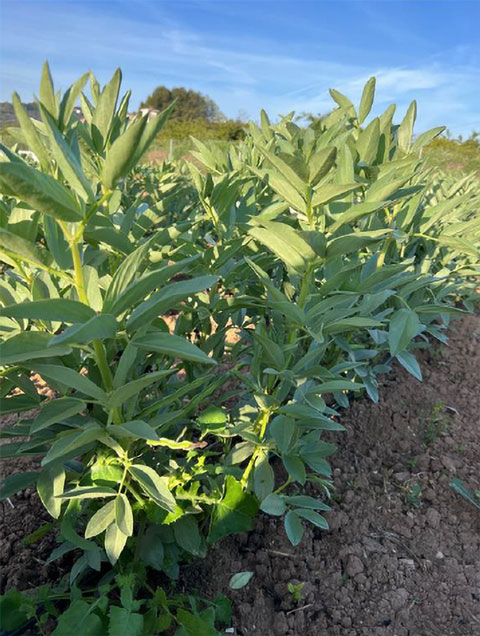
In specific soil trials, Agriful application showed a significant impact on key soil health indicators.
Soil enzymatic activity
Increases were recorded in enzymes directly linked to microbial activity:
- Dehydrogenase: +19%
A direct indicator of active microbial metabolism.
- β-glucosidase: +9%
Associated with organic matter mineralisation.
- Phosphatase: +8%
Related to the availability of plant-assimilable phosphorus.
- Biological Fertility Index (BFI)
The BFI increased by 12%, reflecting a more active, stable, and functional soil system.
Microbial biodiversity
Application of the prebiotic biostimulant resulted in a 357% increase in total mesophilic bacteria, along with higher abundance of key taxonomic groups such as:
- Actinobacteria.
- Proteobacteria.
- Functional genera within the Bacillus group.
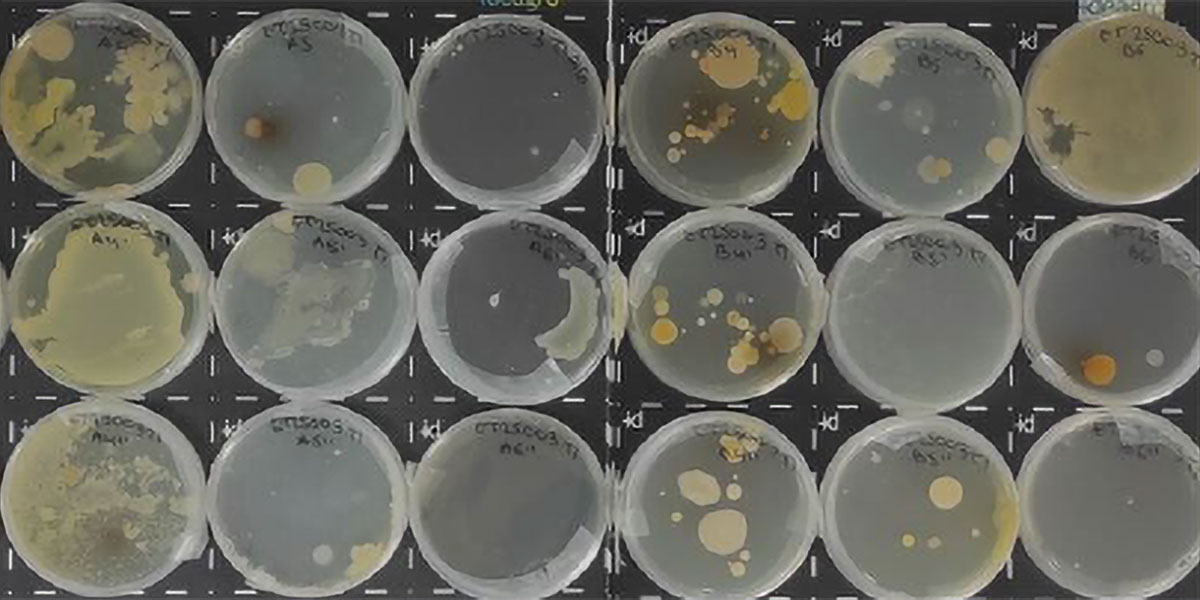
These results confirm Agriful’s ability to activate the soil microbiome, a fundamental pillar of biological soil fertility.
Agronomic impact: nutritional efficiency and yield
The combined activation of the plant and the microbiome translates into measurable agronomic benefits.
In a field trial conducted on faba bean crops, Agriful application resulted in:
- a 14% increase in nitrogen use efficiency (NUE).
- a 27% increase in harvest yield.
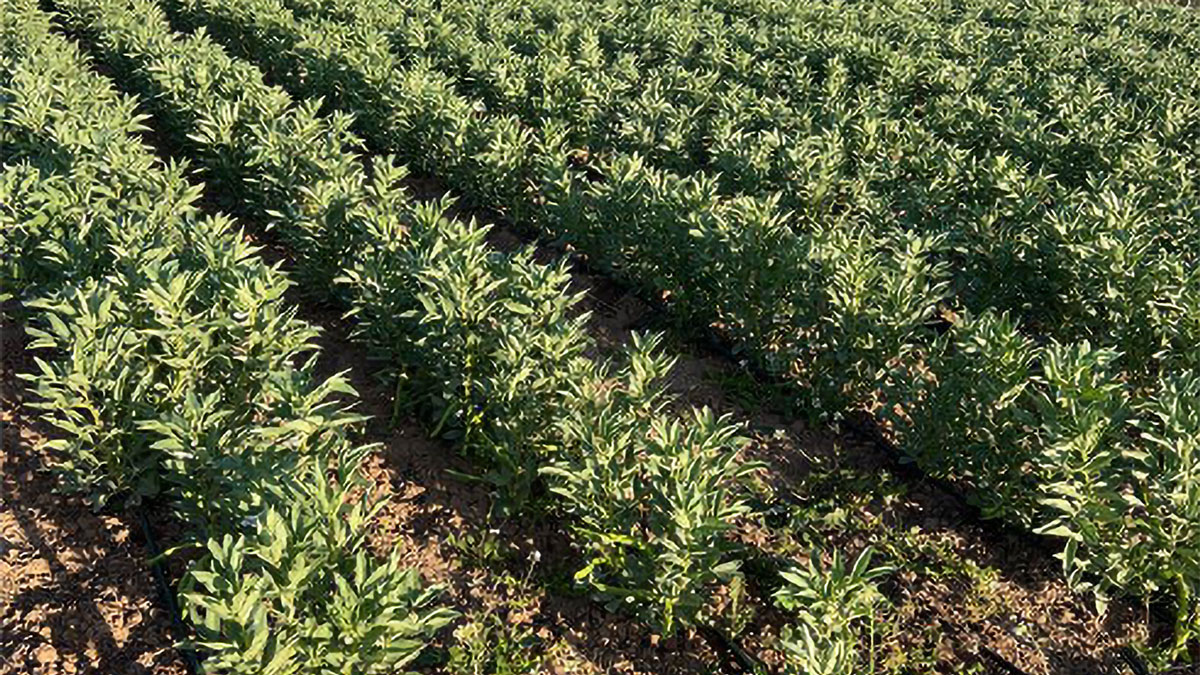
These data demonstrate that prebiotic biostimulation:
- improves nitrogen dynamics in the soil.
- reduces nutrient losses.
- increases productivity without the need to increase inputs.
Synergy with agricultural microorganisms: a complementary approach
The use of beneficial microorganisms is a well-established strategy in agriculture. However, their effectiveness largely depends on soil biological conditions.
In trials where Agriful was combined with reference microbial products based on Bacillus, results showed that:
- applied microorganisms expressed their potential more effectively.
- root and shoot biomass increased.
- crop response was more stable and consistent.
Importantly, this synergy is not specific to a single type of microorganism. It is driven by improved soil conditions. As a result, Agriful’s prebiotic effect is compatible with and complementary to a wide range of reference microbial products available on the market.
Implications for more sustainable agriculture
Integrating plant biostimulation with soil microbiome activation enables progress toward more sustainable production systems:
- higher nutrient use efficiency.
- better fertiliser utilisation.
- reduced variability in biological product performance.
- increased crop resilience under stress conditions.
This approach aligns with the current demands of agriculture based on knowledge, efficiency, and sustainability.
Conclusion
Agriful represents an integrated approach to modern biostimulation by combining:
- direct physiological stimulation of the crop.
- a prebiotic effect on the soil microbiome.
- and synergy with agricultural microorganisms.
Scientific evidence and field results confirm that prior activation of the soil–plant system is a key step in maximising productive efficiency and crop yield.
To learn more about how prebiotic biostimulants can support more efficient and sustainable agricultural systems, fill out the form and our technical team will provide you with detailed information tailored to your needs.