
Types of biostimulants and their origin
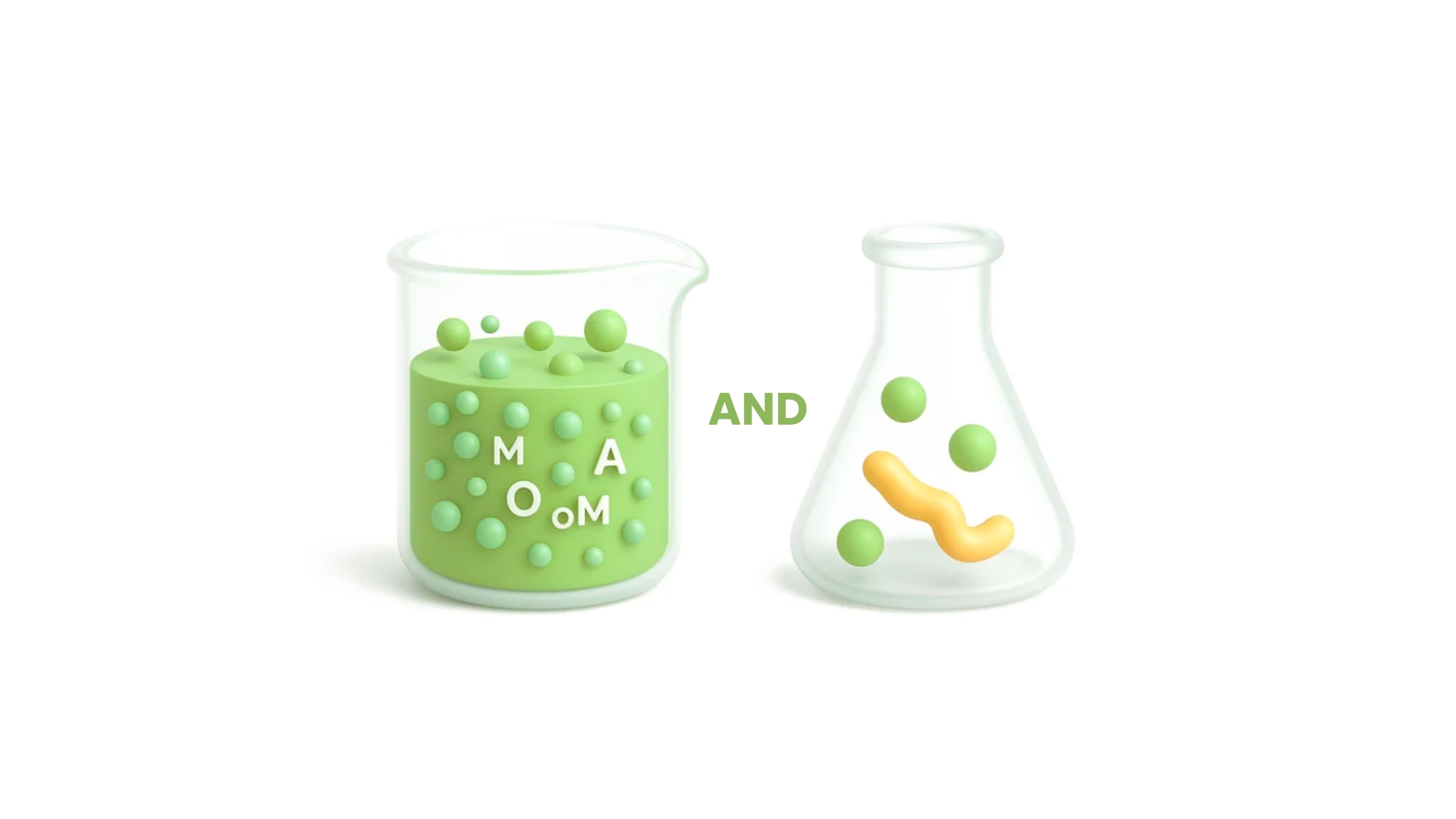
Different types of agricultural biostimulants exist on the market depending on their main composition, such as:
- Seaweed extracts
- Humic and fulvic acids
- Amino acids
- Microorganisms
Among them, amino acid–based biostimulants can be produced in different ways. Here we focus on two of the most relevant:
- Protein hydrolysis (enzymatic or chemical) of plant- or animal-derived proteins.
- Controlled fermentation, where microorganisms transform specific substrates to generate bioactive molecules.
Fermentation and hydrolysis: Two pathways, very different outcomes
Protein hydrolysis consists of breaking down protein chains into amino acids and small peptides.
However, the resulting product has a more limited molecular diversity.
In contrast, fermentation produces a complex broth containing free amino acids plus bioactive molecules such as carboxylic acids, polyphenols, and vitamins, components that provide additional functionalities to the crop.
Although both processes may deliver similar levels of total amino acids, their effect on the plant is different.
Fermented extracts tend to act more broadly and more flexibly, modulating the plant’s response according to its physiological and environmental needs, although the final effect always depends on the product’s composition.
Hydrolysis and Fermentation: Benefits for your crops
Both hydrolysis and fermentation offer agronomic advantages, but each does so in a different way.
Protein hydrolysis
What it is:
Breakdown of plant or animal proteins into free amino acids and small peptides.
Limitation:
Lower diversity of bioactive molecules, although it provides readily available amino acids that the plant can assimilate quickly.
Precision biotechnological fermentation
What it is:
Transformation of substrates by selected microorganisms, producing a broth rich in amino acids and bioactive biomolecules.
Key difference:
Greater molecular complexity, enabling a broader and more synergistic effect on plant physiology.
Conclusion
Both processes are valuable:
- Hydrolysis provides amino acids and metabolic energy,
- Fermentation offers a more complete and multifunctional impact thanks to its complex composition.
Choosing one or the other depends on the desired outcome.
In many cases, both approaches can be combined to maximize crop performance and plant health.