
Heat, drought, salinity, and excessive solar radiation are becoming increasingly common challenges in agriculture. While these environmental conditions cannot be controlled, understanding how plants respond to stress, and how to support those natural defense mechanisms, has become essential for protecting productivity and improving crop resilience.
Every Growing Season Brings the Same Challenge
Every crop depends on favorable environmental conditions to reach its productive potential. But modern agriculture is increasingly exposed to heat waves, prolonged droughts, saline soils, and intense solar radiation that place crops under continuous physiological pressure.
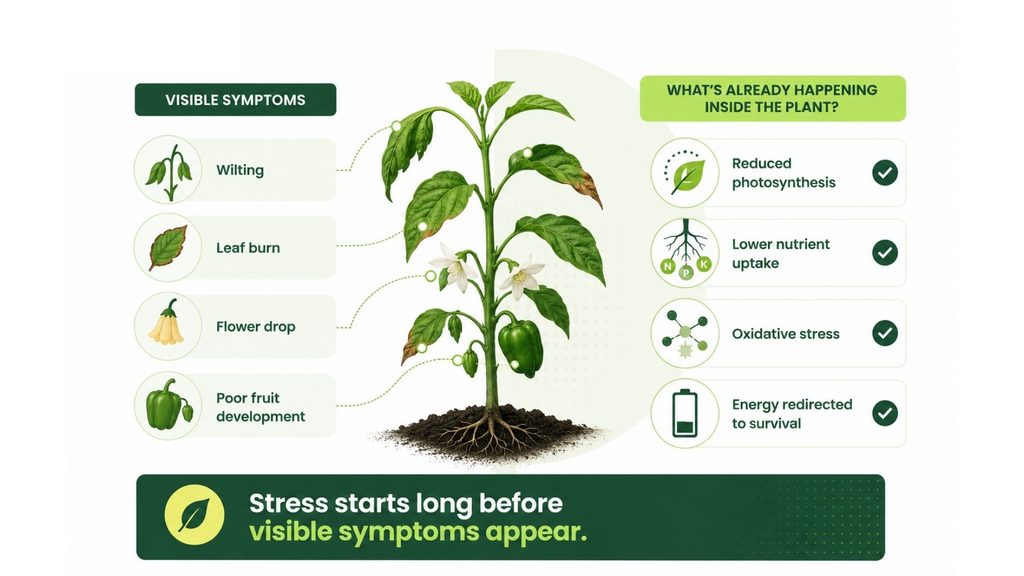
The impact of these stresses is often underestimated because it begins long before visible symptoms appear. A field may still look healthy while photosynthesis slows, nutrient uptake becomes less efficient, and the plant redirects energy away from growth and fruit production toward survival.
By the time leaves wilt or flowers abort, part of the crop’s yield potential may already have been lost. This is why abiotic stress has become one of the greatest hidden threats to agricultural productivity worldwide.
The good news is that plants are far from defenseless. They have evolved sophisticated physiological mechanisms that help them adapt to unfavorable conditions. Today, agricultural biostimulants can support these natural responses, helping crops remain active and productive even when environmental conditions become more demanding.
What Is Abiotic Stress?
Abiotic stress refers to any environmental condition that negatively affects plant growth, development, or productivity.
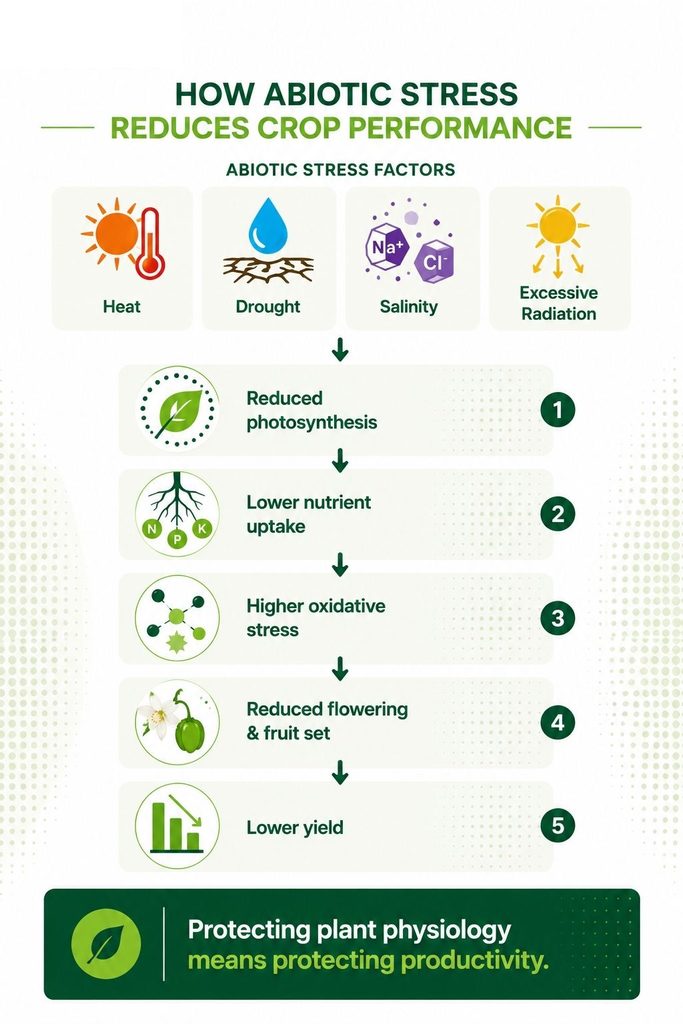
Unlike diseases or insect attacks, abiotic stress is caused by non-living factors, including:
-
- High temperatures
-
- Water deficit and drought
-
- Soil salinity
-
- Excessive solar radiation
-
- Low temperatures
-
- Nutrient imbalances
In commercial agriculture, these factors rarely occur independently. During the growing season, crops are often exposed to several stresses simultaneously, increasing the physiological demands placed on the plant.
Rather than responding to a single challenge, plants must continuously adjust their metabolism to cope with changing environmental conditions while still supporting growth, flowering, and fruit development.
Why Does Abiotic Stress Reduce Yield?
Plants cannot escape unfavorable environmental conditions.
Instead, they respond by activating natural defense mechanisms that help maintain cellular function and reduce damage. While these responses are essential for survival, they also require energy.
As more resources are invested in protection, fewer remain available for growth and reproduction.
This shift affects several key physiological processes simultaneously:
-
- Photosynthesis becomes less efficient.
-
- Water use is more tightly regulated.
-
- Nutrient uptake slows.
-
- Oxidative stress increases.
-
- Flowering and fruit development may be compromised.
The result is simple: even if plants survive the stress event, they often produce less than their genetic potential would allow under optimal conditions.
For growers, this means that protecting crop productivity is not only about avoiding plant death—it is about helping crops maintain physiological performance throughout the growing season.
Supporting Plant Physiology Before Stress Becomes Visible
One of the most important shifts in modern crop management is moving from a reactive to a preventive approach.
Waiting until crops show visible symptoms often means that part of their productive capacity has already been compromised.
However, supporting plant physiology after a stress event can also play an important role in helping crops recover metabolic activity and resume growth.
For this reason, agronomic strategies increasingly focus on both anticipating stress when possible and supporting recovery when environmental conditions have already caused physiological disruption.
This is precisely where agricultural biostimulants have gained importance.
Rather than replacing fertilizers or crop protection products, biostimulants complement them by supporting the plant’s own physiological processes. They help crops maintain metabolic activity, improve stress tolerance, and recover more efficiently after challenging environmental conditions.
But how does this translate into measurable improvements in the field?
To answer this question, AgriTecno evaluated the performance of Tecamin Max under controlled heat-stress conditions in sweet pepper plants.
The results provide a clear example of how strengthening the plant’s natural physiological responses can contribute to maintaining growth, flowering, and ultimately crop productivity.
Field-Proven Results: How Tecamin Max Helped Pepper Plants Perform Under Heat Stress
Understanding how plants respond to abiotic stress is only the first step. For growers, the real question is much more practical:
Can supporting plant physiology actually help preserve crop performance under stressful conditions?
To answer this question, AgriTecno evaluated the performance of Tecamin Max under controlled heat-stress conditions using sweet pepper (Capsicum annuum L.). The plants were exposed to a 10-day period of high temperatures during flowering, reaching 38°C during the day and 28°C at night.
Rather than focusing on a single parameter, the trial monitored several physiological and agronomic indicators, providing a broader picture of how plants responded throughout the stress period.
The results showed a consistent trend: plants treated with Tecamin Max maintained a higher level of physiological activity, allowing them to continue growing and reproducing under conditions that limited the performance of untreated plants.
Cooler Leaves, Better Performance
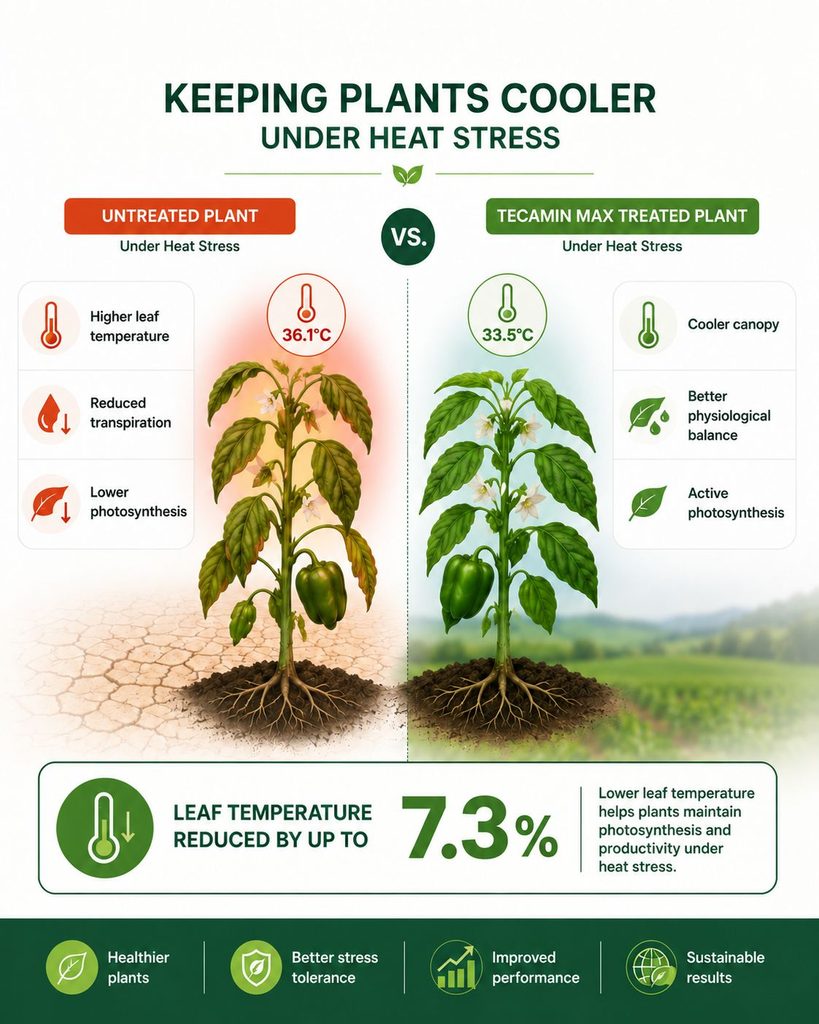
One of the earliest consequences of heat stress is an increase in leaf temperature.
As temperatures rise, plants reduce transpiration to conserve water. While this response is essential for survival, it also limits the plant’s natural cooling capacity and reduces photosynthetic efficiency.
Maintaining a cooler canopy is therefore a good indicator that the plant is coping more effectively with environmental stress.
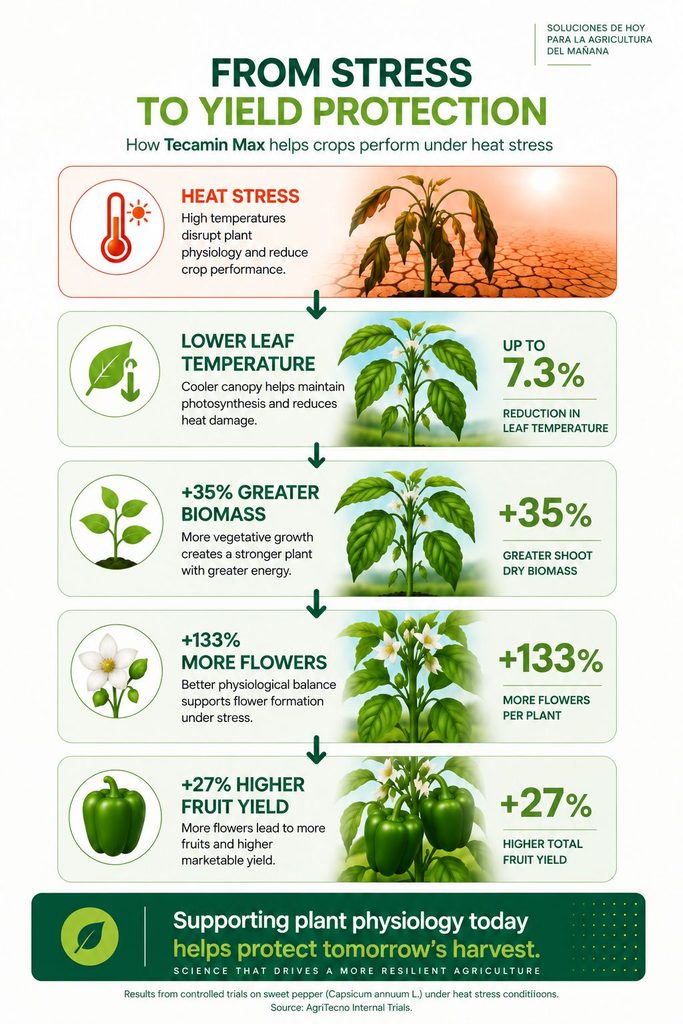
During the trial, pepper plants treated with Tecamin Max showed leaf temperatures up to 7.3% lower than untreated plants.
Although this difference may appear modest, even small reductions in leaf temperature can help maintain metabolic activity during prolonged periods of heat, allowing the plant to continue investing energy in growth instead of survival.
Sustaining Growth When Plants Need It Most
Environmental stress forces plants to make difficult physiological decisions.
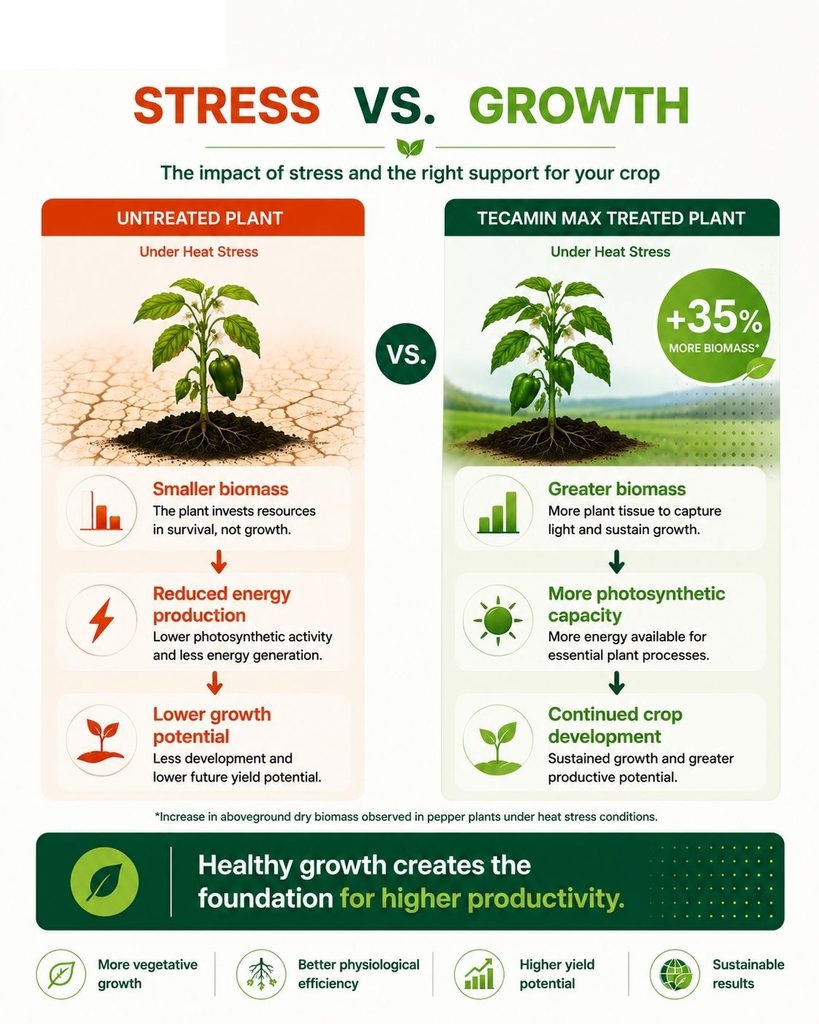
Resources that would normally support new leaves, stems, and reproductive structures are redirected toward protective mechanisms.
As a result, biomass production often slows considerably.
The pepper trial demonstrated that plants receiving Tecamin Max accumulated up to 35% more shoot dry biomass than untreated controls under the same heat-stress conditions.
This is an important finding because biomass reflects much more than plant size.
It indicates that the crop has continued producing photosynthetically active tissue, maintaining the capacity to capture light, generate energy, and support future reproductive development.
Rather than simply surviving the stress period, treated plants continued investing in growth.
Protecting Flowering Means Protecting Future Yield
Flowering is one of the most vulnerable stages of crop development.
Even short periods of high temperature can reduce flower formation, increase flower abortion, and ultimately limit the number of fruits that the plant is capable of producing.
Because of this, maintaining flowering under stressful conditions is one of the strongest indicators that the crop is preserving its productive potential.
In the AgriTecno evaluation, plants treated with Tecamin Max produced up to 133% more flowers than untreated plants throughout the evaluation period.
This improvement was not an isolated response.
It reflected the cumulative effect of maintaining physiological activity during stress:
-
- Lower canopy temperature.
-
- Continued vegetative growth.
-
- Better metabolic balance.
-
- Greater availability of energy for reproductive development.
Instead of interrupting reproduction, treated plants continued producing flowers that could later develop into marketable fruits.
By this stage of the trial, the pattern had become clear.
Supporting plant physiology was not simply improving individual physiological parameters, it was helping plants maintain the biological processes that ultimately determine productivity.
The final question was whether these physiological improvements would translate into what matters most for growers:
Higher yield.
From Plant Physiology to Higher Yield
Ultimately, every agronomic strategy is evaluated by one question:
Does it help produce more marketable yield?
The physiological improvements observed throughout the trial translated into measurable production benefits.
Pepper plants treated with Tecamin Max maintained greater vegetative growth, sustained flowering, and ultimately produced up to 27% more fruit yield under heat-stress conditions than untreated plants.
Rather than being the result of a single physiological response, this improvement reflected the cumulative effect of supporting the plant throughout the stress period.
Healthier physiological activity enabled plants to continue allocating resources to fruit production instead of investing all their energy in survival.
For growers, this reinforces an important concept:
Protecting plant physiology early helps protect productivity later.
What These Results Mean for Growers
Extreme weather events are becoming less predictable and more frequent.
While growers cannot control environmental conditions, they can adopt management strategies that help crops respond more efficiently when stress occurs.
The pepper trial illustrates that supporting plant physiology before irreversible damage develops can help crops:
-
- Maintain photosynthetic activity.
-
- Preserve vegetative growth.
-
- Sustain flowering.
-
- Improve fruit development.
-
- Reduce productivity losses during periods of environmental stress.
This preventive approach aligns with the role of plant biostimulants as defined by the European Fertilising Products Regulation (EU) 2019/1009, which recognizes their ability to stimulate natural plant processes that improve nutrient use efficiency, tolerance to abiotic stress, quality traits, and nutrient availability in the rhizosphere.
Practical Recommendations for Managing Abiotic Stress
Although every crop and growing environment is different, several practical principles can help maximize the benefits of plant biostimulants.
Support crops throughout periods of stressVisible symptoms often appear after physiological damage has already begun. Preventive applications help plants activate their natural defense mechanisms earlier and support crop performance throughout periods of stress and recovery.
Integrate biostimulants into the crop management program
Biostimulants are most effective when used alongside sound irrigation, balanced nutrition, and good agronomic practices.
Consider the crop’s most sensitive growth stages
Periods such as vegetative development, flowering, and fruit set are particularly vulnerable to environmental stress and may benefit most from physiological support.
Focus on protecting productivity—not simply plant survival
The objective is not only to help plants withstand stress, but to maintain growth, reproduction, and final yield under challenging conditions.
Conclusion
Abiotic stress has become one of the greatest challenges facing modern agriculture.
As climate variability increases, maintaining crop productivity depends not only on providing nutrients, but also on supporting the plant’s own physiological capacity to respond to environmental stress.
The results obtained with Tecamin Max demonstrate how strengthening these natural processes can help plants maintain cooler canopies, continue producing biomass, sustain flowering, and ultimately achieve higher yields under heat-stress conditions.
For growers, the message is straightforward:
The most effective way to reduce yield losses is often to support the plant as environmental pressures begin to increase.
Because healthier physiology today creates stronger harvests tomorrow.
Frequently Asked Questions
What is abiotic stress in plants?
Abiotic stress refers to damage caused by non-living environmental factors such as heat, drought, salinity, excessive sunlight, or cold, all of which can reduce plant growth and crop productivity.
How do biostimulants help plants tolerate stress?
Plant biostimulants stimulate natural physiological processes that improve stress tolerance, nutrient use efficiency, and overall crop performance without acting as fertilizers or pesticides.
When should biostimulants be applied?
In most situations, preventive applications before or at the onset of stress provide the greatest benefit, while continued physiological support throughout periods of stress and recovery can help crops maintain performance under challenging conditions.
Can heat stress reduce crop yield even if plants survive?
Yes. Heat stress often reduces photosynthesis, flowering, and fruit development long before visible damage appears, leading to lower final yields.
Why are amino acid-based biostimulants used under heat stress?
Amino acid-based formulations help support plant metabolism during stressful conditions, allowing crops to maintain physiological activity and recover more efficiently.
Ready to Help Your Crops Perform Under Stress?
Environmental challenges are becoming more frequent—but yield losses don’t have to be.
Discover how Tecamin Max and AgriTecno’s science-based biostimulant solutions can help crops maintain productivity under heat and other abiotic stresses.