
In recent years, intense solar radiation has evolved from an occasional challenge into a structural variable in agronomic planning.
We are not only talking about extreme heat events.
We are talking about cumulative radiation load, direct fruit exposure during sensitive developmental stages, and plant tissues receiving more energy than they can physiologically manage.
The issue is not limited to visible sunburn.
The real problem begins much earlier:
- Protein denaturation
- Reduced photosynthetic activity
- Increased production of reactive oxygen species (ROS)
- Higher transpiration demand
- Reduced water-use efficiency
Every sunburned fruit is more than a physiological injury.
It is a direct economic loss.
Against this backdrop, SUNGUARD was developed: a mineral-based formulation designed to manage incident radiation on plant tissues, reducing harmful radiation while helping maintain crop physiological stability.
What Is SUNGUARD?
SUNGUARD is a concentrated suspension based on natural minerals rich in calcium and magnesium, designed to form a protective film over the aerial parts of the crop.
It is not simply a white coating.
Its technology is based on finely milled, plate-shaped mineral particles capable of:
- Blocking high-energy UV radiation
- Reflecting part of the thermal radiation
- Converting part of the incoming light into usable diffuse radiation
- Filtering wavelengths that support photosynthesis
The goal is not to block light.
The goal is to reflect the right light.
Ease of Use and Application Performance
SUNGUARD has been developed to combine physiological effectiveness with operational simplicity in the field.
Its formulation enables efficient application without disrupting normal spray equipment performance.
Application Advantages
- Stable and homogeneous formulation for easy tank preparation
- Does not clog nozzles or filters when applied according to recommendations
- Does not generate problematic tank residues
- Does not soil application equipment
SUNGUARD integrates seamlessly into standard crop protection programs, providing protection against excessive radiation without adding operational complexity.
It forms an ultra-thin functional mineral film on plant tissues. Its exclusive formulation helps prevent visible residue on fruit and preserves market appearance and commercial quality.
Mode of Action: Three Ways to Manage Radiation on Plant Tissues
When certain wavelengths—particularly high-energy radiation—strike plant tissues during critical stages such as fruit set, fruit enlargement, or periods of low canopy coverage, crops enter a high-risk production scenario.
SUNGUARD manages radiation through three complementary mechanisms:
1. Selective Filtering of High-Energy Radiation
The mineral particles reflect part of the ultraviolet (UV) radiation and other short wavelengths associated with higher energy loads.
This reduces the amount of energy directly impacting leaves and fruit surfaces, lowering the risk of cellular damage.
2. Partial Reflection of Thermal Radiation
SUNGUARD reflects a significant portion of the thermal radiation responsible for surface heating while allowing photosynthetically active radiation to pass through.
By reducing direct energy absorption, heat accumulation in leaves and fruit is minimized.
The result is lower thermal stress and improved photosynthetic efficiency.
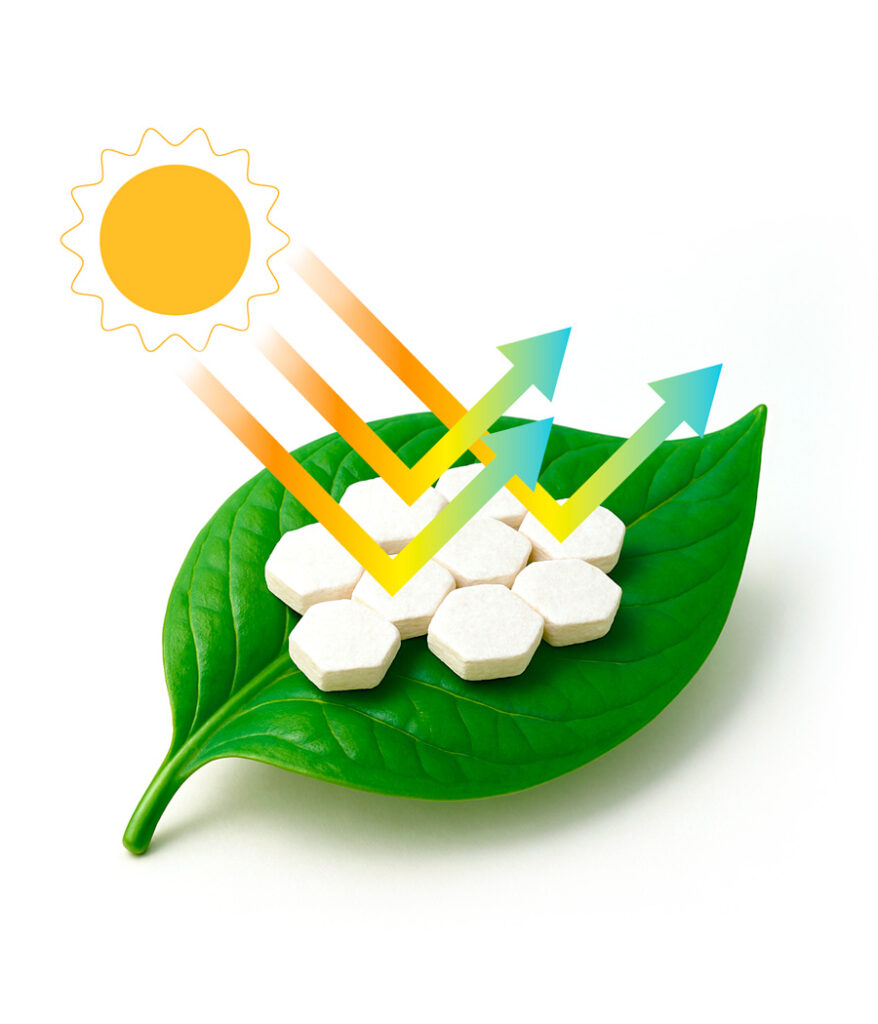
3. Conversion of Direct Light into Diffuse Radiation
Part of the incoming radiation is scattered and transformed into diffuse light.
This improves light distribution throughout the plant canopy, enhancing light penetration into lower plant layers without increasing overheating risk in the most exposed areas.
Agronomic Benefits: Direct Impact on Crop Stability and Performance
Proper radiation management delivers measurable benefits in crop productivity and quality.
Reduced Sunburn Losses
By lowering the energy load on exposed fruit, SUNGUARD helps reduce the incidence of sunburn damage.
This translates into:
- Higher percentages of marketable fruit
- Reduced field and packinghouse losses
- Greater crop uniformity
Less damaged fruit means more saleable production and greater economic stability per hectare.
Lower Plant Tissue Temperature
Partial reflection of thermal radiation results in a measurable reduction in surface temperature.
Lower tissue temperatures contribute to improved physiological stability during periods of peak radiation.
Reduced Oxidative Stress
Intense radiation and overheating increase the production of ROS, which are responsible for oxidative stress.
By limiting the energy load reaching plant tissues, SUNGUARD helps reduce oxidative pressure and preserve cellular integrity.
Improved Water-Use Efficiency
When surface temperatures decrease, plants require less transpiration to regulate their temperature.
This improves water-use efficiency and contributes to a more balanced water status during periods of high radiation.
Field Results: Thermal Imaging Assessment Using Drones
To evaluate the real impact of SUNGUARD on plant tissue temperature, measurements were conducted under high solar radiation conditions across different crops and production environments.
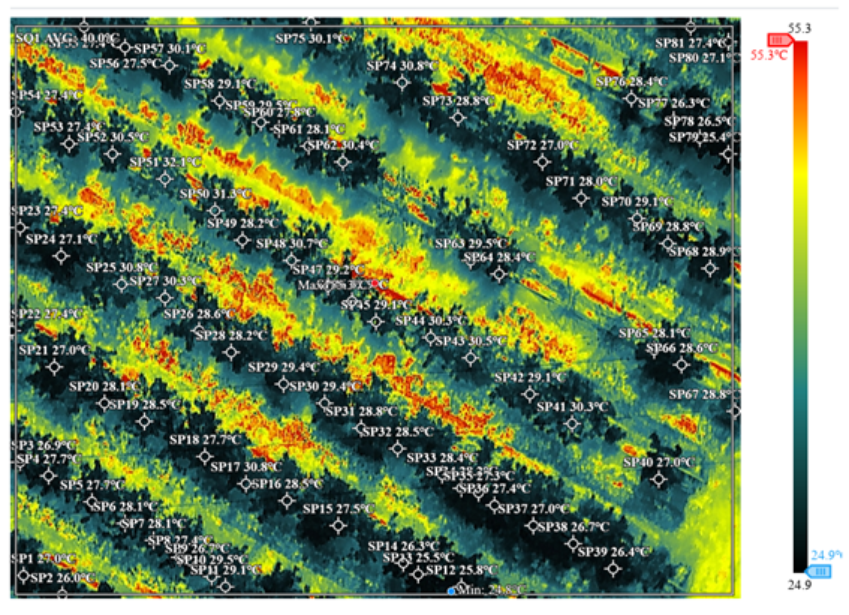
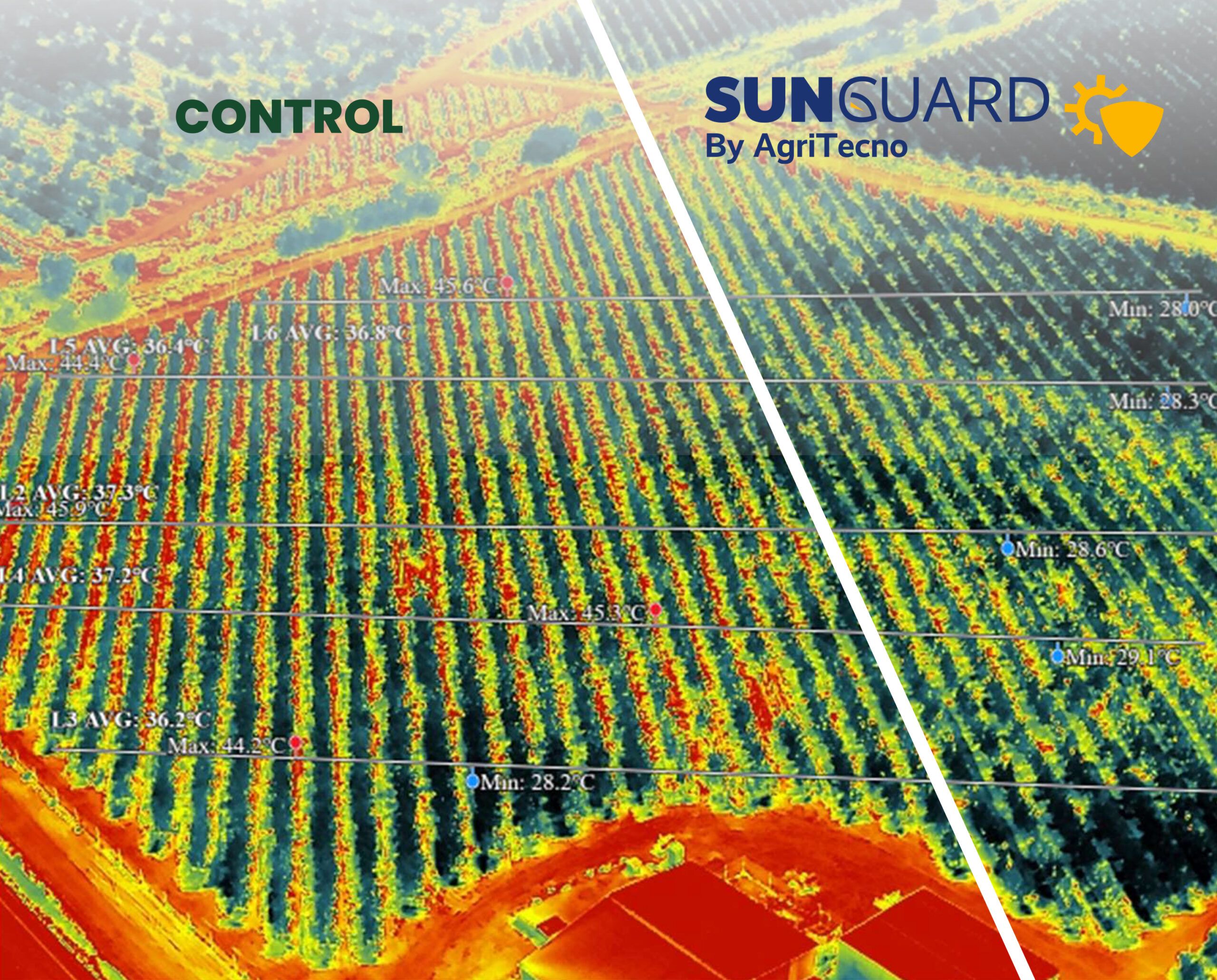
A few days after application, drone flights equipped with high-resolution thermal imaging cameras were carried out, recording hundreds of temperature measurement points across treated and untreated plots.
This methodology provides an objective assessment of tissue temperature beyond ambient air temperature and generates a comprehensive thermal map of the field to identify differences and evaluate treatment uniformity.
Apple
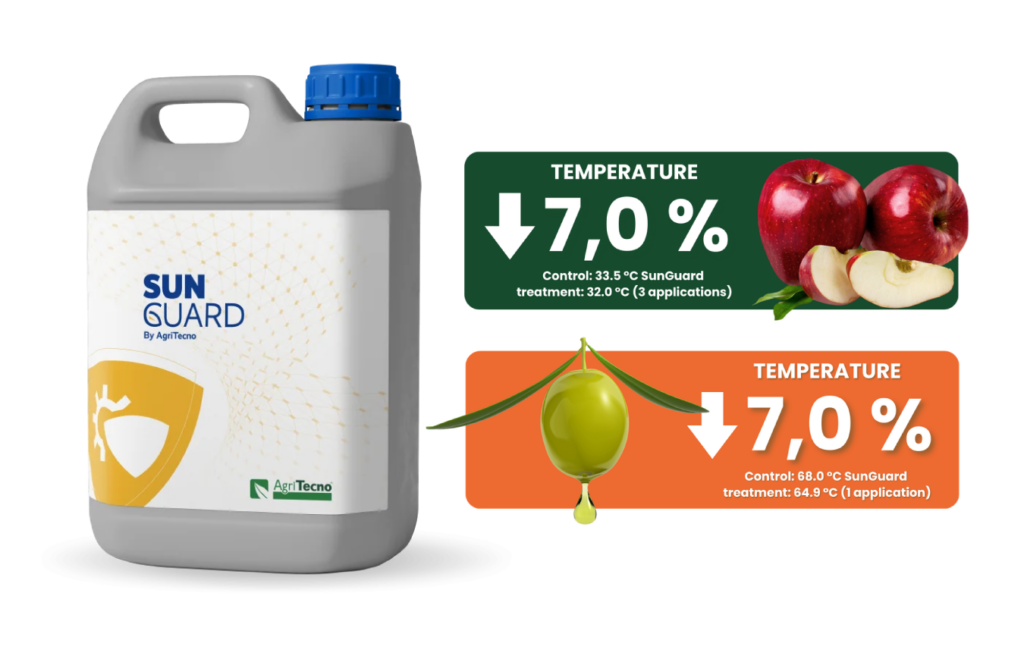
- Untreated Control: 33.5°C
- SUNGUARD (3 applications): 32.0°C
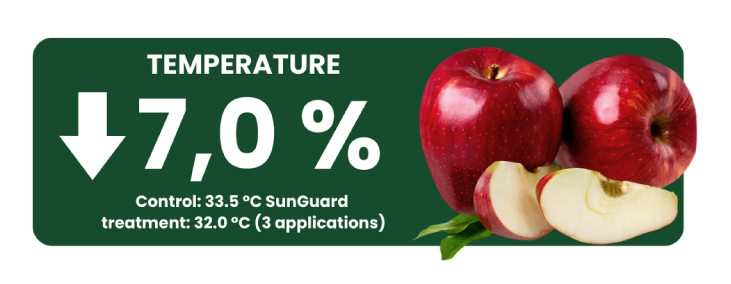
Temperature reduction: -7.0%
In apple orchards, temperature reductions of up to 1.5°C compared with the untreated control were recorded.
Olive
- Untreated Control: 68.0°C
- SUNGUARD (1 application): 64.9°C
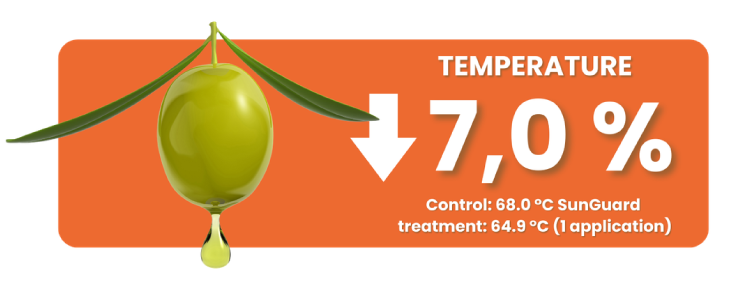
Temperature reduction: -4.6%
In olive trees, a crop highly exposed to solar radiation, thermal reductions of up to 3.1°C compared with the untreated control were observed.
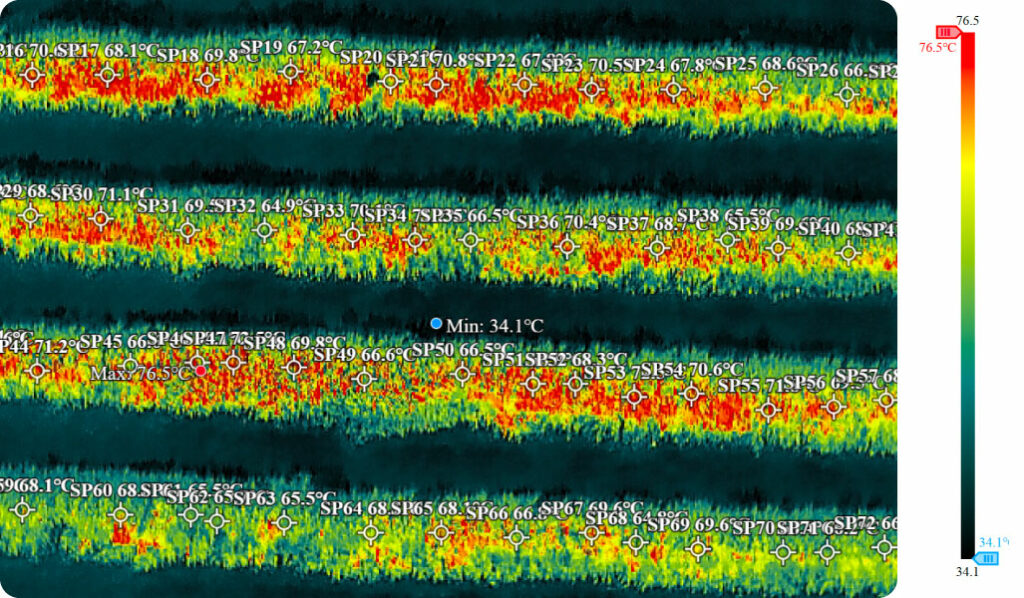
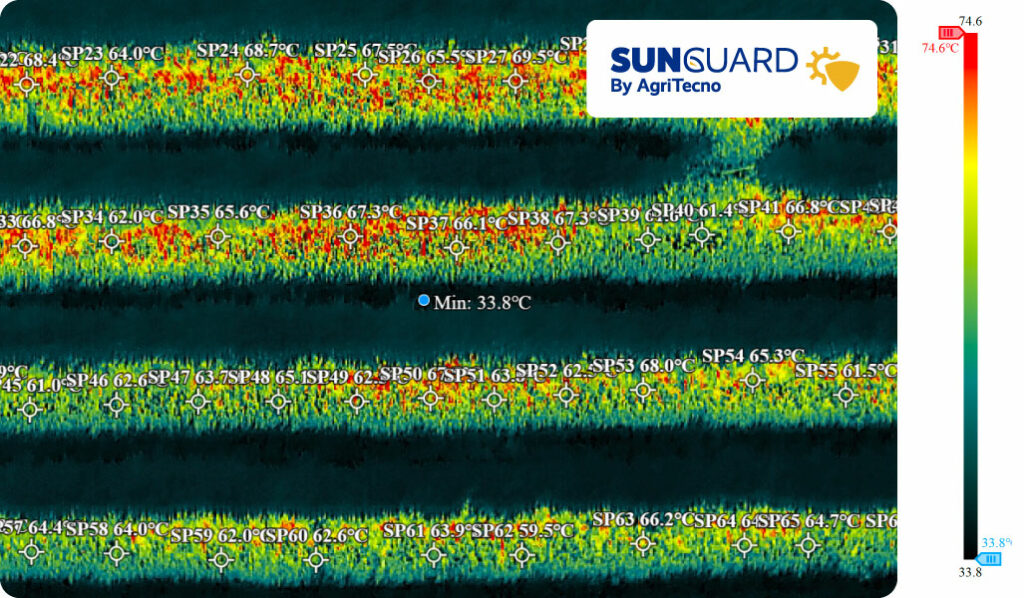
These results confirm that radiation management with SUNGUARD has a measurable impact on crop surface temperature under real field conditions.
The thermal reduction is not theoretical.
It is observable and quantifiable.
Conclusion: Managing Radiation Means Protecting Profitability
In a production environment where intense solar radiation has become a recurring challenge, light management is now a strategic agronomic tool.
Sunburn is not merely a physiological disorder.
It is a direct reduction in marketable yield.
SUNGUARD works by managing the radiation reaching plant tissues, helping reduce damage, maintain crop physiological stability, and protect the economic outcome of the season.
Because when plant tissues are protected, production is protected.