The real test happens in the field
A positive response in plants matters. But ultimately, one question matters most:
Does that response translate into a meaningful benefit for the crop?
That is why field trials are an essential part of AgriTecno’s work.
Testing solutions across different crops, climates, and production systems allows us to understand not only how plants respond, but whether that response is sustained throughout the crop cycle and ultimately translates into relevant agronomic outcomes.
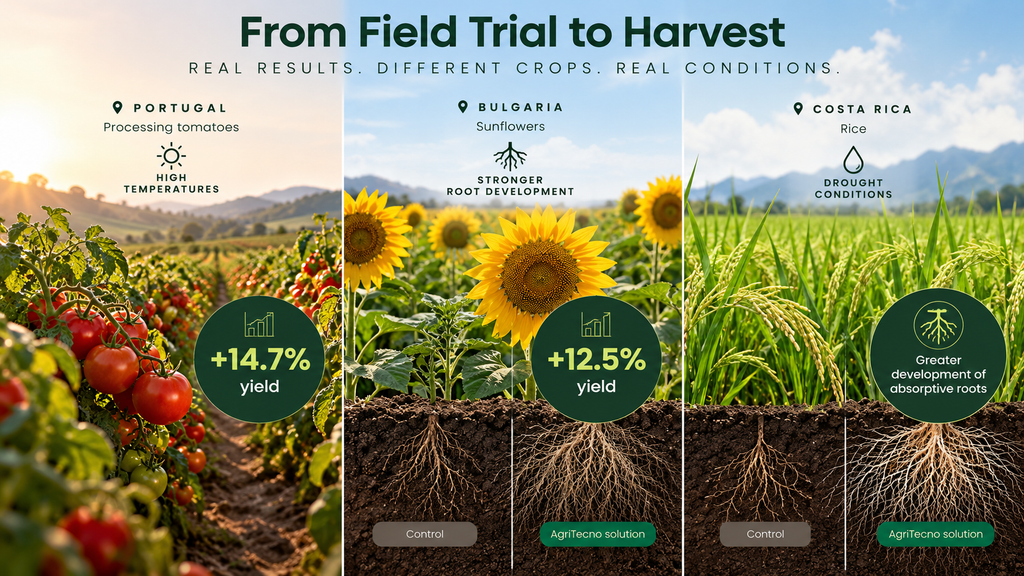
Results from different countries show how this approach can lead to higher yields, stronger root development, and improved crop response under challenging conditions.
Portugal: Maintaining Yield After Heat Stress
Extreme temperatures can disrupt essential physiological processes and compromise a crop’s yield potential even after the stress event has passed.
In a field trial conducted on processing tomatoes in Portugal, crops were exposed totemperatures exceeding 38°C for two consecutive days.
The AgriTecno strategy evaluated in the trial helped the crop maintain stronger productive performance following the heat stress period.
+14.7% yield
The treated crop achieved a 14.7% higher yield compared with the control.
This result highlights an important agronomic point: managing stress is not only about how the plant looks while adverse conditions are occurring. It is also about protecting its ability to continue performing after the stress has passed.
+14.7% yield in processing tomatoes
Bulgaria: When Stronger Roots Translate Into Yield
What happens below ground can determine much of what we eventually see above it.
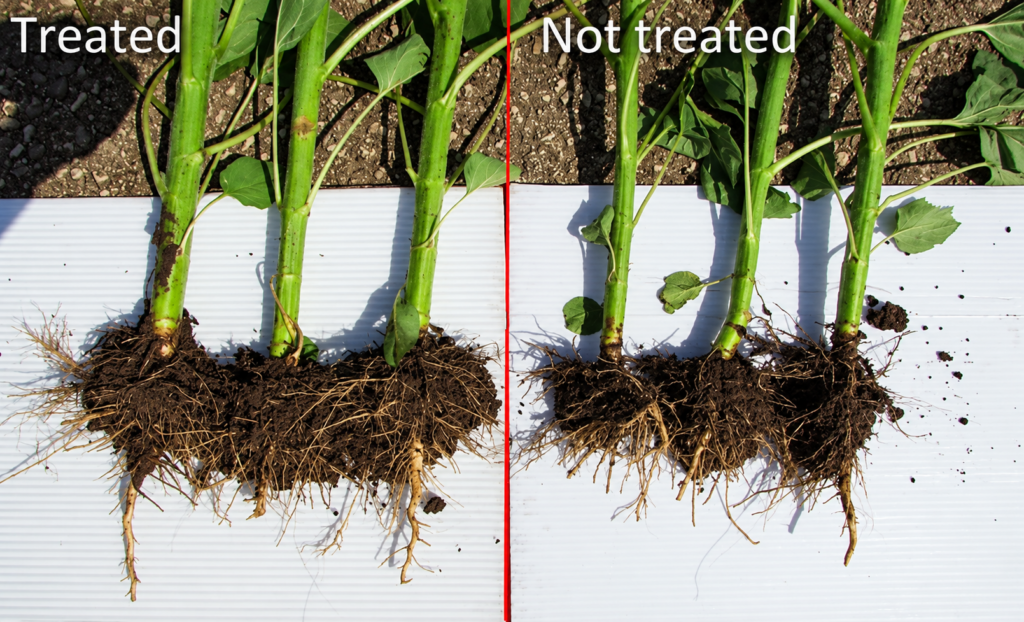
A well-developed root system allows crops to explore a greater volume of soil and improve access to available resources.
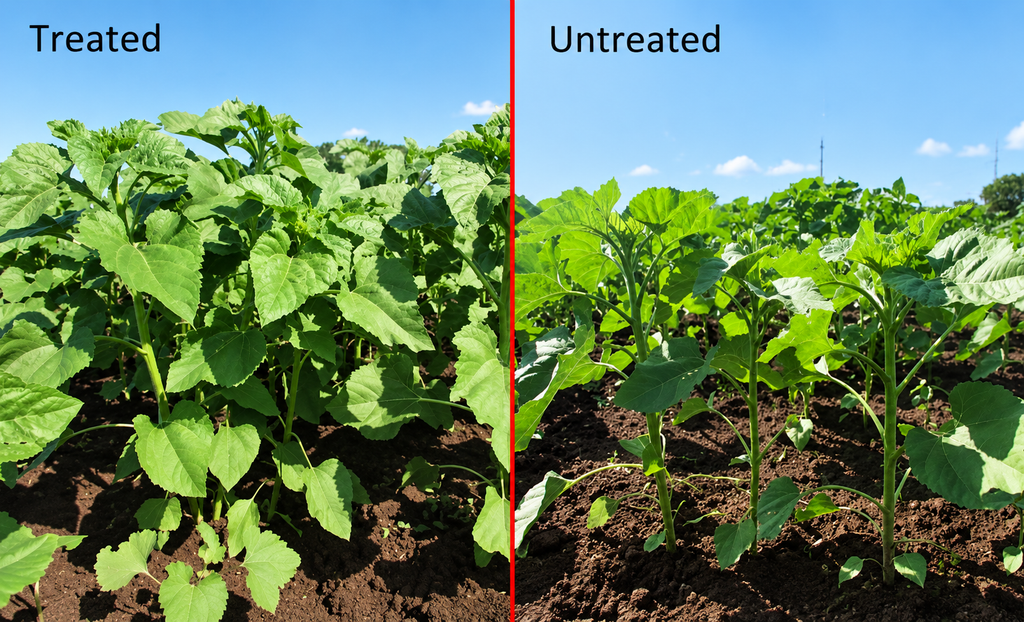
In sunflowers in Bulgaria, trials with AgriTecno solutions showed stronger root development together with improved crop productivity.
+12.5% yield
The treated crop achieved a 12.5% increase in yield compared with the control.
Observations of the root system also provided visual evidence of the different crop response.
This is one of the key advantages of field validation: it allows us to connect what happens during plant development with what ultimately happens at harvest.
STRONGER ROOT DEVELOPMENT
+12.5% yield
Costa Rica: Seeing the Response Where It Begins
Not every meaningful agronomic result has to be expressed immediately in tons per hectare.
When water availability is limited, the plant’s ability to develop a functional root system becomes particularly important.
In a trial conducted on rice in Costa Rica under drought conditions, treated plants showed a stronger and more uniform crop establishment under water-stress conditions.
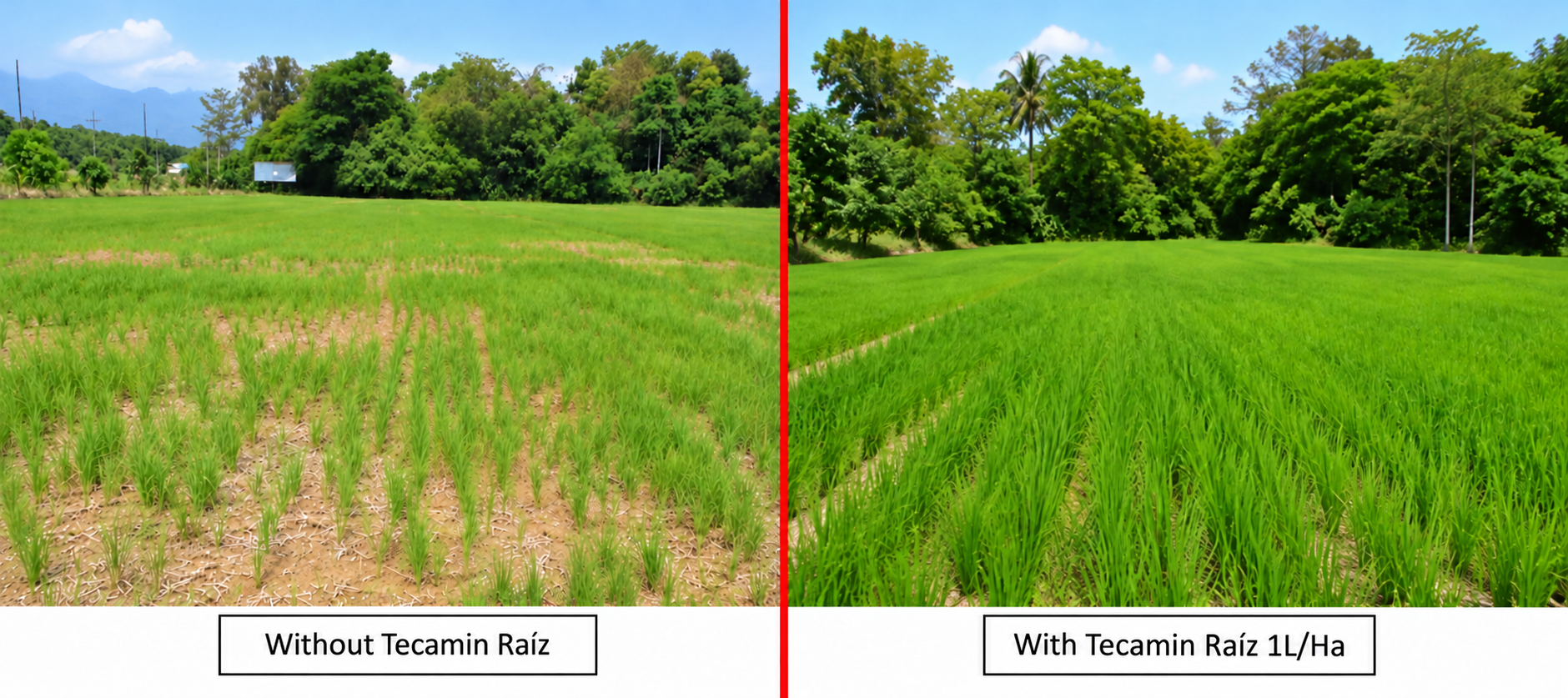
This response is consistent with improved root system development, helping the crop maintain access to water and nutrients when availability becomes limiting.
While the trial was not designed to generate a yield claim, it provided clear visual evidence of a more vigorous crop response under drought conditions.
The value of the trial lies precisely in demonstrating a visible improvement in crop establishment and development under water stress.
SEEING IS UNDERSTANDING
Greater development of absorptive roots under drought conditions
Different Crops. Different Conditions. One Question.
Processing tomatoes in Portugal.
Sunflowers in Bulgaria.
Rice in Costa Rica.
Different crops, geographies, and agronomic challenges. And that is precisely what makes these cases relevant.
Crop response to a biostimulant strategy depends on multiple factors, including crop species, growth stage, environmental conditions, soil characteristics, water availability, and agronomic management.
For that reason, no single field result can automatically be extrapolated to every growing condition.
Validation across different scenarios helps build agronomic knowledge from evidence and provides a better understanding of where, when, and how a solution can deliver value.
From Experimental Results to Agronomic Decisions
Agriculture needs more than promising technologies.
It needs evidence that supports better decisions.
A yield increase can demonstrate the final outcome. Stronger root development can help explain how a crop responds. Improved recovery after stress can reveal what happens throughout the growing cycle.
Each result tells part of the story.
When these observations are analyzed together, field trials become more than a validation tool. They become a source of knowledge that can be applied in the field.
At AgriTecno, that is the objective: connecting science, plant physiology, and agronomic results to develop solutions that address the real challenges facing agriculture.
Science matters. Results do too.
Because agricultural innovation ultimately proves its value when it moves from physiological response to field performance, and from the field to harvest.